
Skull Base Tumor
Skull Base Surgery in Mumbai | Dr. Rakesh Katna
Trusted Skull Base & Neuro Oncosurgeon · Mumbai, Maharashtra
Dr. Rakesh Katna is a specialist surgeon in Mumbai with advanced training in complex skull base and brain tumor surgery, helping patients regain safety, function, and confidence after conditions affecting the base of the skull and the structures beneath it. Every treatment plan is personalised to your diagnosis, your anatomy, and your goals.
Key Highlights:
- Advanced Skull Base Surgical Training
- Brain Tumor & Neuro Oncology Specialist
- Multidisciplinary, Minimally Invasive Approach
- Serving Mumbai & Thane
The Procedure
What is Skull Base Surgery?
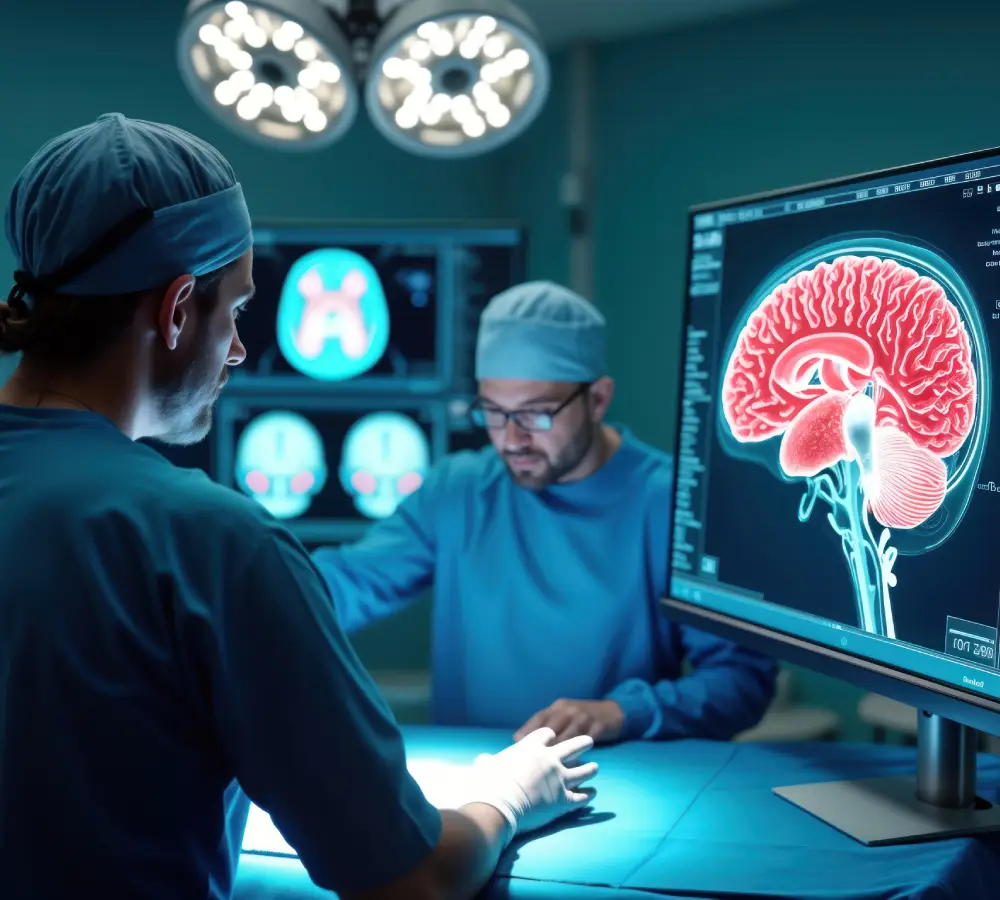
Skull base surgery is a highly specialised field of neurosurgery focused on treating tumors and lesions located at the base of the skull, the complex region where the brain meets the spine, sinuses, eyes, and major blood vessels. Because this area houses critical nerves and vessels, skull base surgery in Mumbai performed by Dr. Katna combines precise imaging, microsurgical technique, and where appropriate, endoscopic and minimally invasive approaches to remove tumors safely while protecting vision, hearing, facial movement, and overall neurological function. Many procedures are planned jointly with ENT surgeons, ophthalmologists, and radiation oncologists, ensuring every angle of a complex case is addressed before the operation even begins.
Indications
When is Skull Base Surgery Needed?
- Pituitary Tumors
Growths at the base of the brain affecting hormone balance, vision, and daily function, often removed through minimally invasive endonasal routes.
- Meningiomas of the Skull Base
Tumors arising from the membranes covering the brain near critical nerves, requiring meticulous microsurgical removal.
- Acoustic Neuromas
Tumors of the hearing and balance nerve that call for techniques preserving hearing and facial nerve function wherever possible.
- Chordomas and Chondrosarcomas
Rare bone based tumors at the skull base needing wide, precise resection to reduce recurrence.
- Cerebrospinal Fluid Leaks
Repair of leaks at the skull base to prevent infection and restore normal brain and sinus pressure.


The Procedure
Why patients choose
free flap reconstruction
The most reliable path back to natural function and confidence after head and neck cancer surgery.
Preserves Critical Function
Vision, hearing, facial movement, and hormonal balance are carefully protected through precise, nerve sparing technique.
Minimally Invasive Options
Many tumors are approached through the nose or small incisions, reducing scarring, pain, and hospital stay.
Complete, Safe Tumor Removal
Advanced imaging and neuro navigation allow maximal safe resection while limiting risk to nearby structures.
Multidisciplinary Planning
A team of neurosurgeons, ENT specialists, and oncologists reviews every case for well rounded care.
Faster Recovery
Modern surgical technique helps many patients return to daily life sooner than with older, more invasive methods.
Treatment Process
Step by step, with you at every stage
Step 1
Consultation
Dr. Katna reviews your symptoms, scans, and medical history and discusses your concerns and goals in detail
Step 2
Evaluation
MRI, CT, hormonal blood work, and hearing or vision assessments are completed to fully map the tumor and its relationship to nearby structures.
Step 3
Surgical Planning
The safest surgical corridor, whether endoscopic, microsurgical, or a combined approach, is selected and mapped with the multidisciplinary team.
Step 4
Surgery
The procedure is performed using neuro navigation and, where relevant, endoscopic visualisation to achieve safe, precise tumor removal.
Step 5
Recovery & Follow-Up
Close monitoring in the initial days is followed by rehabilitation, hormonal or nutritional support if needed, and regular imaging to track long term outcomes.
Why Dr. Rakesh Katna
A Surgeon You Can Trust
Experienced Skull Base Surgeon in Mumbai
Extensive training and hands on experience across complex pituitary, meningioma, and brain tumor cases.
Advanced Microsurgical and Endoscopic Expertise
A precise, nerve preserving technique that supports consistently strong functional outcomes.
Personalised Care
Every skull base surgery plan in Mumbai is built around your specific tumor, symptoms, and priorities.
Comprehensive Neuro Oncology Support
Dr. Katna coordinates radiation oncologists, endocrinologists, and rehabilitation specialists so your entire journey is managed under one roof.
Other Specialities
Explore Dr. Katna's other services
Beyond skull base surgery, Dr. Katna offers a comprehensive range of neurosurgical and oncology services in Mumbai.
Brain Tumor Surgery in Mumbai
Surgical removal of benign and malignant brain tumors using advanced imaging and microsurgical technique.
- Know more
Head and Neck Cancer Surgery
Surgical treatment of oral cavity, throat, larynx, and thyroid tumors with precise oncological margins.
- Know more
Neck Dissection Surgery
Selective and radical neck dissections as part of a complete cancer treatment plan.
- Know more
Free Flap Reconstruction Surgery
Microsurgical reconstruction restoring function after major head and neck cancer surgery.
- Know more
Salivary Gland Surgery
Parotidectomy and submandibular gland surgery for tumours and chronic disease, with nerve preservation where possible.
- Know more
FAQ
Frequently Asked Questions
Skull base surgery is a specialised procedure to remove tumors or repair conditions at the base of the skull, the region connecting the brain to the spine, sinuses, and major nerves and vessels.
Patients with pituitary tumors, meningiomas, acoustic neuromas, chordomas, or other lesions at the base of the skull that cannot be safely managed with observation or medication alone.
Many minimally invasive skull base procedures allow discharge within a few days, with most patients returning to routine activity within 2 to 6 weeks depending on tumor size and location.
Skull base surgery is a well established field, and with careful planning, modern imaging, and experienced technique, risks to vision, hearing, and other critical function are significantly minimised.
Not always. Some brain tumors are managed through standard neurosurgical routes, while others located near the skull base require this specialised approach for safe, complete removal.
Dr. Katna is a dedicated surgeon in Mumbai with specialised skull base and brain tumor surgery training, a multidisciplinary team approach, and a strong focus on preserving quality of life alongside safe tumor removal.
- Thane & Mumbai